Wearable Computing Project (2/10)
Posted by Wesley onShortly after returning from the recruitment camp in September, I contemplated on the creation of a computer that could be worn, much akin to wearing a clothing, if possible. This would set the goal of of the resulting system that was both small in length & width, light, and relatively flat. While I found that a modern laptop computers were close to meeting these parameters, I decided not to base my new system on one. First, most modern laptops feature a large display which increased the overall length & width and exceeded my plans. Second, I would want the input and output devices separate from the main unit so that I could use it without having to put the system on a surface somewhere. Third, a laptop computer, even today, is basically a 'ready-made' unit straight from the manufacturer. It does not need work on my side to make it work in the first place. Being a computer freak who's built many custom systems, this is extremely unacceptable. Well, many of the fellow freaks can understand me on this, I'm sure.
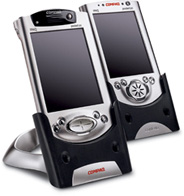
Now the PDA's came to mind. A today's PDA has full-colour display, has an embedded processor running up to 200MHz, runs Windows-like interface, and has lots of applications that mirror a 'normal' computer's counterpart. They're quite small enough to be 'worn', so to speak, being put into a pocket when not in use. This side of the spectrum sounded good, but was not without shortcomings. Basically, most of the units have very small screens, and running Windows CE or PalmOS, it has reduced functionality compared to a desktop OS. Not to mention I would have to forfeit the use of many of the usual programs I've been accustomed to using. A PDA is a far cry from being a replacement of a true desktop computer. And I've not even mentioned the storage problems. I wouldn't call a PDA a 'computer', so to speak, in these aspects, and therefore was ruled out from selected for use.
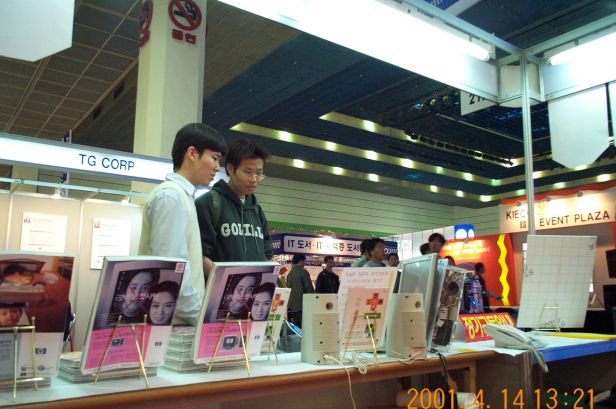
This pretty much narrowed my choice for building a wearable computer. I need a small motherboard. And a small display. And a small keyboard. And a small pointing device. First things first, I had to find a small motherboard to work my dreams on. This reminded me to search for that myriad of catalogs I had gathered at the trade shows I had visited in the recent years. A single brochure had immediately caught my attention, that of a company called Maxan Systems. This company featured a range of custom-design motherboards built for mainly for set-tops and industrial computers. Naturally, the typical dimensions of the motherboards they made were generally quite smaller than a conventional computer motherboard. I definitely needed to pay this company a visit. Fortunately, this company was native to my country.
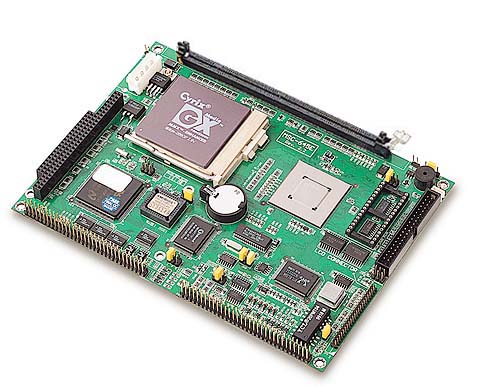
The office location was a bit elusive, though, and I had to take a long trip by taxi. I found out later that it could be reached easily by a bus (and that which also stops near my dormitory, adding insult to injury), though. I had some lengthy talks about how I need a Maxan motherboard for my project, and how I could browse through the recent products (the catalog I had was apparently old and outdated). The marketing manager showed me the updated catalog so that I could find my motherboard of choice easily. It was deemed that their MSC-740B and MSC-735 models were fulfilling most of my requirements; both were very small, supported Pentium III-level CPU, had 3D capability, and had native LCD panel support. I was sort of leaning on the 735 as it had smaller dimensions, but he explained that the 735 never went into full production and was not a viable choice. Hence my choice was pegged to the 740B. Fortunately, they had some of these models in boxes in the storage room, and I was able to buy the motherboard right on the spot using electronic payment. It was rather expensive, making me $300 poorer, but I felt really good about it.