Miniature Air Conditioner (1/5)

Seasonal changes can be an annoyance to overclockers. Winter can provide exceptional overclocking environment, then summer comes up and you can't overclock so much anymore. Korea has vastly distinct seasonal characteristics, and while it may be easily -10C in winter, 30C or higher is common in a summer day. The day I'm writing this article was no exception.
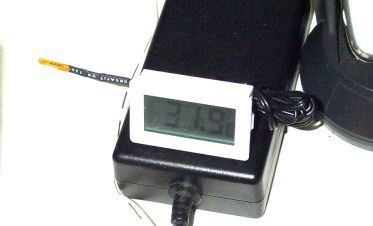
31.9C according to the digital thermometer today...

It is quite important to keep room temperature(a.k.a. ambient temperature) low in cooling and overclocking, because a normal cooler is directly dependent on it. It uses air to exchange heat, so it cannot cool down to something below the air's temperature. However, the room temperature is easily affected by the season, especially if you're living in a place where there is no direct means of temperature control. So a hotter season will have detrimental effects on an overclocked computer.

One may resort to opening the computer case and direct a huge fan towards it, but alas, that is out of option for me, as I have this Portable Athlon which cannot be opened while in use. I might be able to cool myself down, but it would have no affect on my unit. Furthermore, I currently reside in a dorm room, so I cannot place an air conditioner. So my system has to take the summer heat directly... unless I do something about it.

Then it came to my mind that I had a TEC(Thermo-Electric Cooler) lying around in my toolbox. TEC is a small block of ceramic which has two types of semiconductors sandwiched in it so that it transfers heat from one side to the other side very quickly when electricity is supplied to it. This heat transfer effect is known as 'Peltier effect', and so you may have seen the TEC commonly referred to as a 'Peltier'. I had once tried to use it on an overclocking experiment, but it failed due to insufficient cooling on the hot side. The CPU involved in the experiment almost burned out in the process, and the TEC, along with the project, was abandoned. You can see the photo from that experiment below.
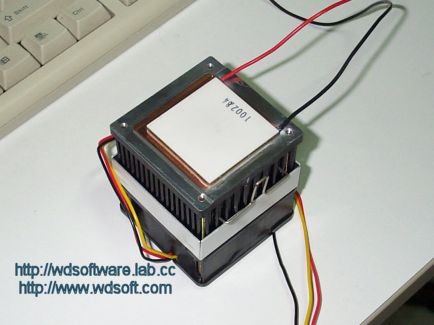
Old photo from the defunct TEC overclocking project - white square on the cooler is the TEC

If that experiment taught me anything, modern day CPUs are too hot for a TEC-on-cooler to cool sufficiently. So now what?

[56097] - Hardware Product Update

Hardware Products section is updated. Prices for products and shipping have been adjusted. New beta of MultiWin 2 Uploaded.

N-Bench Upload

Hey, here's a cool thing to try when you're bored. N-Bench from AMD Japan! It's very 3D-oriented like 3DMark from MadOnion.com and the interface looks like them, too! :-) I've uploaded this gem HERE. Update: The file has been taken down to free up server space.

Portable Athlon Followup

The follow-up article to the Portable Athlon, which answers such question as how it's carried around and how much it weighs is up for your read. Click here to read!

Carrying the Portable Athlon (2/2)

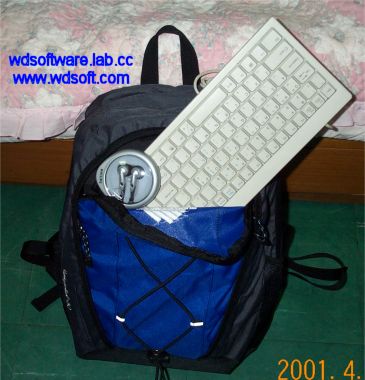
Keyboard finds its place
Of course there is! The backpack features additional storage space on the front and I can put the keyboard into this area easily. The earphone case would rattle if I placed it in the main compartment, so it's put in with the keyboard to prevent noise.
All Packed!
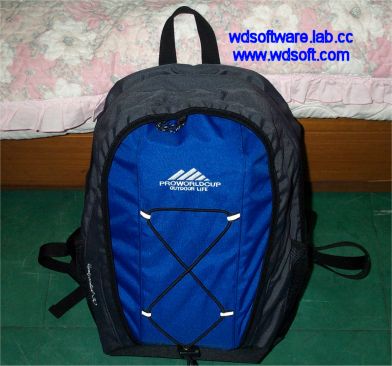
The system is fully in the backpack now!
Carrying Around
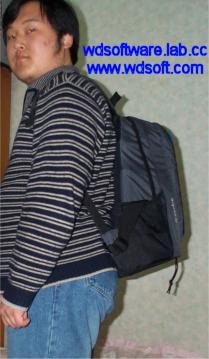
That's me with the backpack. Now I can go anywhere with my system in the back. Due to the concealing nature of the backpack, though, most people thinks I'm going camping or something. :-)

Yet another thing to consider. How much does it really weigh, anyway? I didn't know this exactly myself, as I didn't have a chance to do an accurate measurement. I just felt that carrying around this was a bit heavy, but bearable. Fortunately, I encountered a digital bathroom scale accurate up to 50g which was deemed suitable for answering the big question.
Component kg Lbs.
System Case 4.60 10.14
LCD Panel 2.90 6.39
Keyboard 0.45 0.99
Mouse 0.15 0.33
USB LAN + Earphones 0.05 0.11
Cables 0.90 1.98
Backpack 0.65 1.43
TOTAL 9.70 21.4

While modern notebook computers weigh in at around 2 to 4kg, my portable system isn't throwing around extremely lot of weight either. In fact, it's lighter than world's first portable computer, 'Osbourne 1' from 1981, which weighed 24 pounds(11kg) and came in a luggage. So, I hope your questions are answered now. I'm off to study for some exams next week.

Copyright (C) 1996-2026 Woo-Duk Chung (Wesley Woo-Duk Hwang-Chung). All rights reserved.