Lots of companies are hopping on the wave of Internet of Things (IoT) these days, each trying to build an ecosystem of their own. Major Korean mobile carriers (SK Telecom(SKT), KT, and LGU+) are no different, each setting up proprietary efforts. I used to largely ignore them because they required monthly fee, ranging from a few dollars per device to tens of dollars for "unlimited" (discounted with multi-year contract). With many non-carrier solutions usable without fees, I felt this to be undesirable.
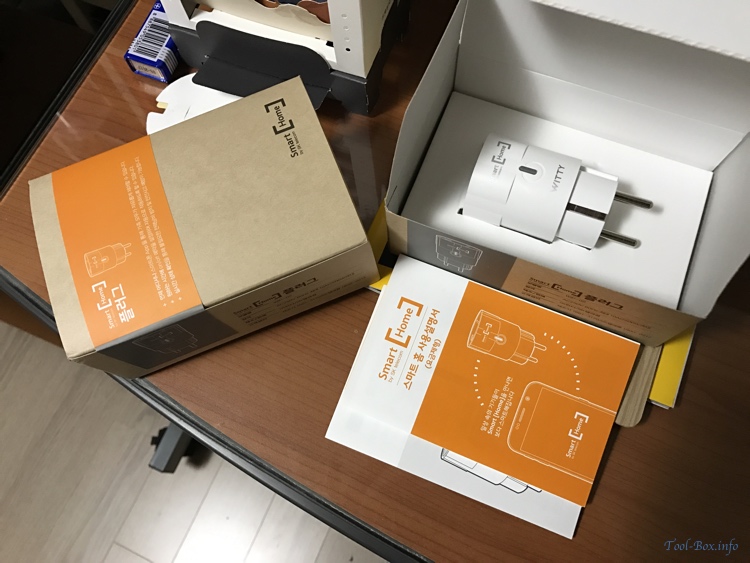
However, SKT must have felt that this arrangement was hurting their chances for wide acceptance, because it began offering some of their affiliated products free of monthly fees, charging only a nominal (KRW 5,500, US$4.80) one-time fee included in the sales price since last October. I decided to take the bait and started integrating their home IoT products, sold under the "SKT Smart Home" brand, into my house. The very first one was a smart plug. The one you see here is the one made by Witty.
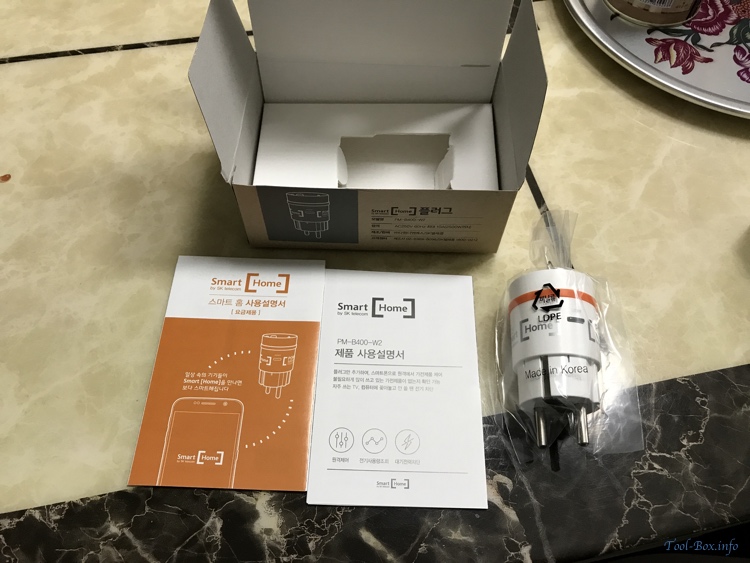
Smart Plug "Dawon Power Manager" PM-B400-W2
Over time, I installed several of these plugs around the house and some of them came from another company, Dawon DNS. Because SKT was selling them, lots of things were made to be nearly identical, namely the packaging and the functionality. The frugal-looking brown paper boxes contain the plug and the instruction manuals, all of which look almost exactly the same except for the diagram of the plug. Both companies' plugs are controlled by the one and the same official app, and works largely like as if they are the same product.
Even the price is similar, at around $22.50 to $26, which makes them one of the most inexpensive options. This includes the aforementioned fee, so the pricing is rather aggressive. The deal is made even sweeter by the fact that the plugs do not need any gateways or hubs to operate as some other solutions do (namely that of other carriers'). It will interface directly via Wi-Fi, so if you already have a wireless router at home there's no additional cost involved.